The Universe is Generative
The Universe is Generative
The seventh Hermetic principle is the principle of Gender, which I initially sighed at, because of the language introducing the principle in the Kybalion, which focuses on binary gender. But, as you look more into this principle, it clarifies, “The word ‘Gender’ is derived from the Latin root meaning ‘to beget; to procreate; to generate; to create; to produce.’” In this way, it lays the foundation of an interesting discussion of the spectrum of gender and what it means to generate or be creative.
This principle made me think more deeply into the concept of what we call gender and the link between how we culturally talk about gender and how we talk about what is generative or creative about us. When we talk about gender as limited to a binary, we essentially say that the female or male sex assigned at birth determines what it means for that person to be generative or creative and creativity is limited to a person’s ability or interest in participating in conception of a human embryo.
This is clearly an absurd limitation and the creativity of the universe and even of each human goes far beyond this limited binary and limited act. At least there is absurdity in saying that a person who chooses not to participate in the creation of a human embryo has no gender. Those who would advocate a gender binary would not even agree to that concept, although it is the logical conclusion of fixation on pregnancy as meaningful to gender.
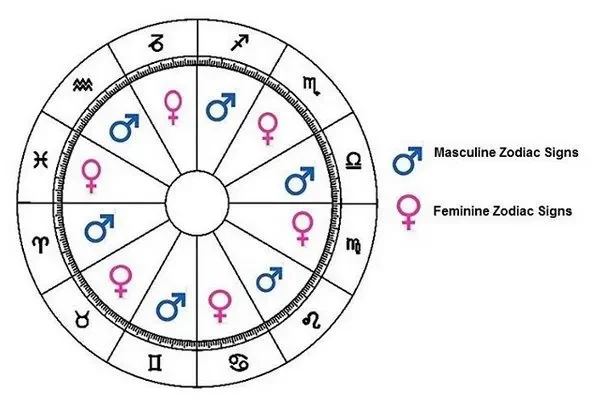
In astrology, we talk specifically about gender by dividing signs into “masculine” or “feminine” much like many languages divide words or speaking into masculine and feminine. But, even within astrology, we can see this as a spectrum, and every person, regardless of the sex assigned to them at birth has a range of masculine or feminine signs within their natal chart. You can check them out here:
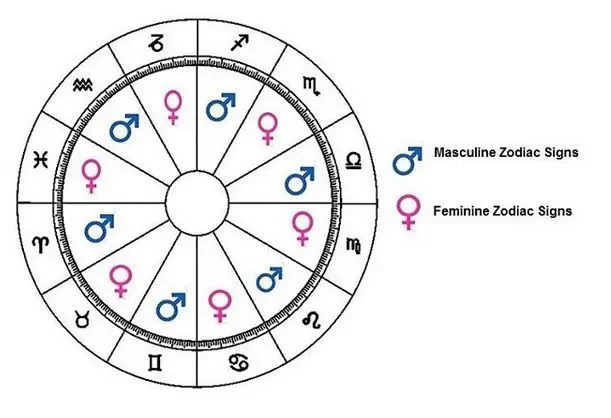
Image showing the traditional masculine and feminine designations of signs with every other sign being masculine (starting with Aries) and the others being feminine (ending with Pisces).
Each of the planets, not just the moon, is constantly traveling through the zodiac, each with their own influence on each other, us, and our environments, and so much of astrology is the study of the correlation of the ebbs and flows of the astrological cycles to the ebbs and flows on earth.
In law, the ebbs and flows of progress and regress are something that have enormous impact on each of our lives, even if we do not see them right away. Some believe that if you set realistic, but small, expectations for progress, you will get more traction and establish a better foundation for future progress. This was the theory Ruth Bader Ginsberg had when she advocated for gender equality using the disadvantage to men as her focus. Others believe a “blitzkrieg” of extreme action is more effective, believing that the more extreme the action, the less opportunity there is to counteract it. This is the theory behind the implementation of Project 2025.
There is also an increasingly large gap between what the general public in the United States understands to be the state of progress and regress and what legal professionals understand it to be.
For example, when COVID vaccines first came out, I received quite a few calls from conservative people who wanted to avoid getting vaccines where they were mandatory, based on conservative religious views. When I told them about their limited options, they explained to me that they understood their right to work with their medical doctors for healthcare to be absolute. Of course, those rights have been undermined by conservative advocates who are against women receiving reproductive healthcare. But, the conservative people I talked to were very surprised to hear that.
That raises the question as to whether the Principle of Rhythm applies to understanding and ignorance just as it does to other topics. We may have general moments of clarity and inspiration as flow points and moments of misunderstanding and ignorance as ebb points.
The best resources I have found for tracking this and understanding our own ebbs and flows in life is to watch the moons through the astrological chart. In generally tracking the moons for years, I have found that when the moon is in hard aspect to Pluto, and when there is a full moon, I have very low and agitated energy. While this is a work in progress, I have started taking those days off, knowing that they are ebb times. They are better for reflection, emotional processing, and introspection than attempting to create and influence the world.
My theory is that the more we study our own ebbs and flows and allow them to happen, the more effective we can be in influencing the ebbs and flows of our communities and the better we can reduce frustration.
Chance is but a name for Law not recognized
Chance is but a name for Law not recognized
The sixth Hermetic Principle is that of Cause and Effect. The Kybalion, which is the source of the Hermetic Principles says, “Every Cause has its Effect; every Effect has its Cause; everything happens according to Law; Chance is but a name for Law not recognized; there are many planes of causation, but nothing escapes Law.”
As a lawyer, astrologer, and systems enthusiast (sometimes aka control enthusiast) this is one of my favorite Hermetic principles. No dis intended at the other principles, though. They’re all lovely.
The Hermetic wisdom behind the principle of cause and effect says that all of our actions and inactions, down to the level of our thoughts, have impacts. This can be overwhelming to think about at first, but is ultimately empowering.
For example, imagine sitting on a couch under a blanket and thinking about someone you love. Your mind fills with thoughts of what you like about them, your body relaxes, and you may even decide to send them a little note. Your little love note makes their day better (or worse depending on their internal state), and then they express how they are feeling to their dog, and so forth.
And, at the same time, while you are sitting on the couch thinking about them, you are not doing 1000 other things. So, the inaction also has impacts. You are not robbing a bank, you are not protesting fascism, you are not learning to speak Japanese.
We understand our thoughts, feelings, and actions most clearly by looking at the external results (otherwise known as consequences or effects) we have. When we can take responsibility for the results we have, we can be most empowered and then look at how to get results that are in better alignment with who we are.
Legal Cause and Effect. This principle is solidly baked into the legal system in the US, and I imagine it is central to most other legal systems, though feel free to tell me if you know of a system that does not center cause and effect. However, the ways we handle this in the legal system is also based on exceptionalism and hierarchy, so we both nominally center cause and effect, and then typically deny the system’s participation in the cause and effect.
In the law, causation is a central component of proving any crime or civil violation, down to the level of thoughts (or, “mens rea” as you may know from Legally Blonde). For example, in proving a violation of law occurred, we have to prove that the harm happened (the effect), and that the violation of law was the cause of that harm. We also have to prove the level of intent the person had. Were they ignoring the rules or were they violating the rules intentionally, knowing what the rules were? That makes a difference in how the law handles a situation.
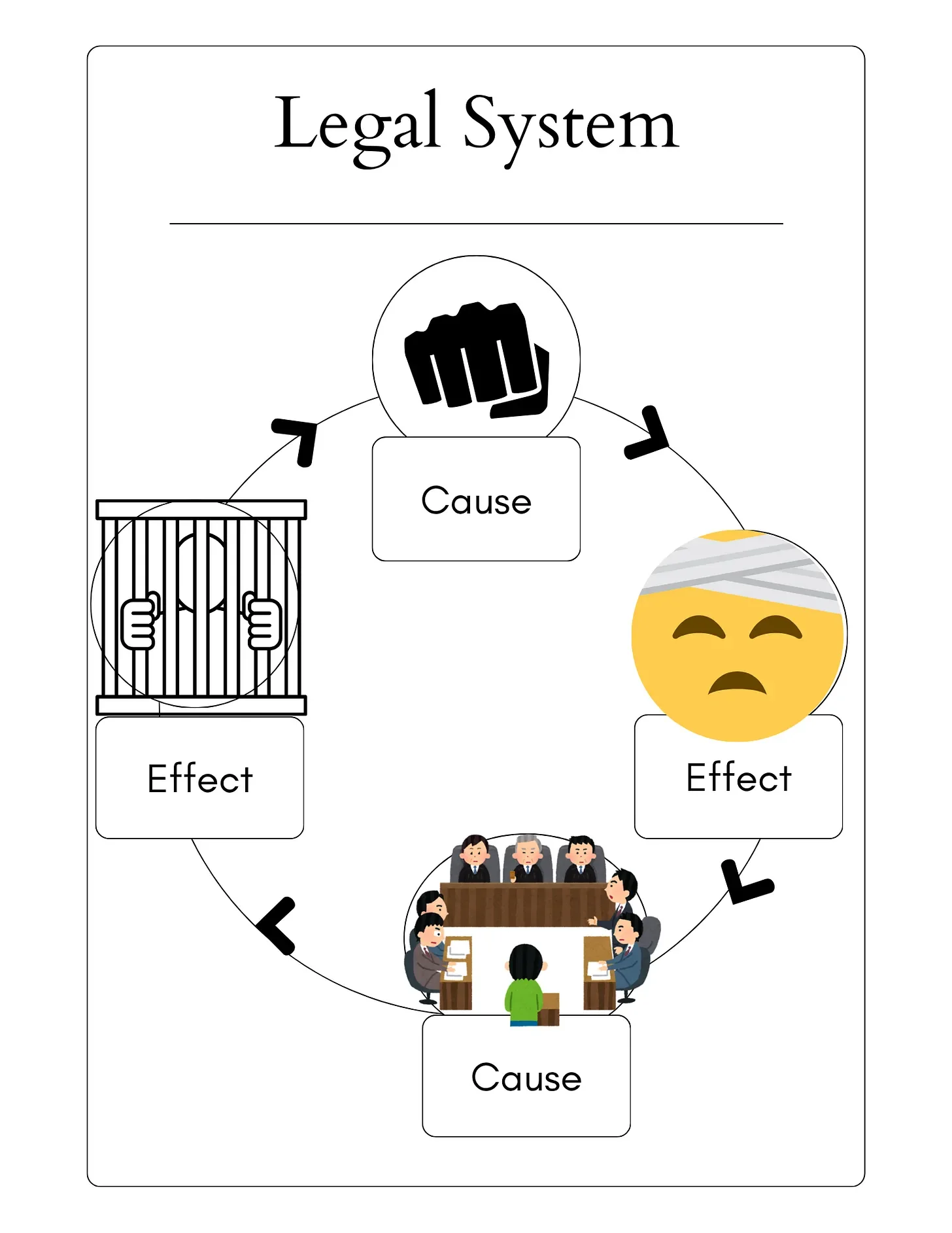
What the legal system generally does not evaluate is its own cause and effect. So, most people within the legal system are just “doing their job,” which is processing paperwork, talking on the phone, or making and evaluating arguments in court. Most judges have a sentencing docket during their day in which they evaluate recommended criminal punishments. On any given day, a judge and lawyers may send a handful of people to live in a cage for a certain amount of time. But, because the intent of the judge and lawyers is to follow the system, we call that laudable, while we call someone who puts other people in cages outside of the system a criminal and even a human rights violator.
In some ways, we justify effects if they live within a system that we do not justify outside of a system, although we are still a cause or the cause of that effect.
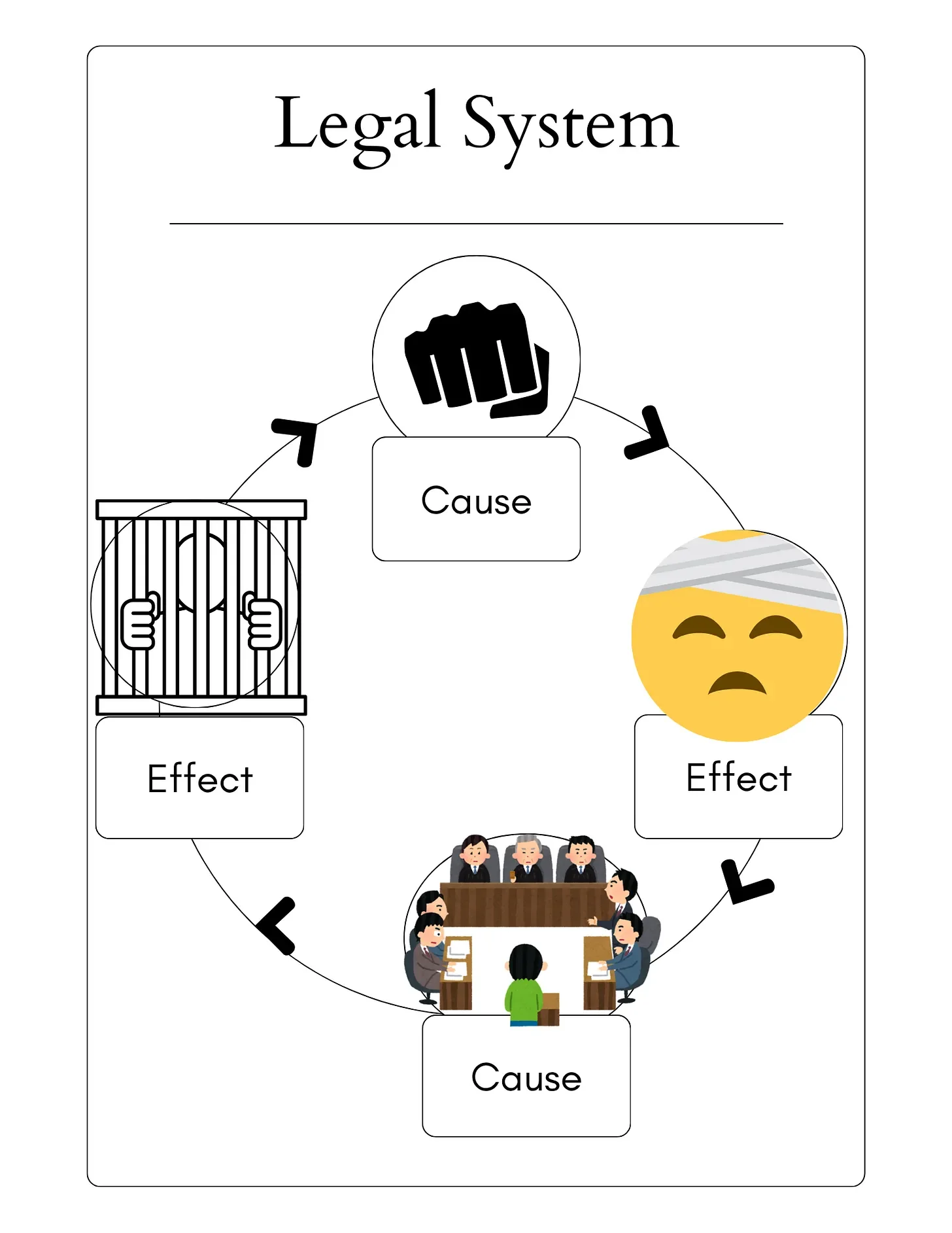
Image showing a cycle of harm in the legal system. One person causes harm, then the system causes harm and the cycle repeats.
In this way respectability culture and hierarchy give us cause and effect blindness. And, at the same time, what do we do with people who are routinely causing harm in order to decrease harm and increase community safety, which most of us want? If we are more honest about cause an effect we can form a better answer to that, and in many areas and systems we already have. For example, based on watching cause and effect we know that access to medical and mental health treatment and housing significantly reduces crime and other harms, while prison often increases risk of harms. So, if we really want to make communities safer, cause and effect honesty is a crucial part of that.
Cause and Effect in Astrology. In astrology, we mostly talk about correlation, rather than causation, but astrology provides a personal framework for talking about cause and effect, versus a the social framework that the legal system provides. So, astrology is the study of the correlation between celestial events and earthly or personal events. There has historically been a debate over whether astrology says the stars “cause” earthly events or whether the stars are a map or reflection of fate, like a mirror that provides impressions of the progression of time, rather than reflecting an exact image of the present. Chris Brennon’s Hellenistic Astrology course goes into this concept in much more detail, so check that out if it is an interesting topic to you.
On a personal level, astrology, and specifically the signs of the zodiac, provide a map of our own inclinations that start a conversation about our personal causes and effects and whether they are in alignment with who we truly are and who we want to be.
As a personal exploration, look at your own astrological natal chart (go to astro.com to get it if you don’t already have it) and find out where the signs are in your chart and how emphasized they are. While you might have heard that you are an “Aries,” meaning your sun is in Aries, a true natal chart reading includes all of the signs with specific placements and emphases regarding them. So, because we all have all of the signs present in our chart, and in that way we are all a unique little universe or mirror of the larger universe, we can look at our own charts to be more intentional about our internal and external causes and effects.
I may go into these in more depth for each sign, but below is a brief overview of each sign in terms of how they participate in cause and effect on a basic level.
When you look at the components that make up who you are, you can better understand yourself as a Cause in life, rather than as simply an Effect of external circumstances or upbringing.
This is a basic overview of the signs as they engage with cause and effect, though this is by no means comprehensive.
Aries. Aries is an active (yang), cardinal, fire sign. This means that if you think about the element of fire, you understand something about Aries. “Cardinal” means the sign is associated with leading.
Taurus. Taurus is a receptive (yin), fixed, earth sign. This means that if you think about the element of earth, you understand something about Taurus. Within earth, Taurus is somewhat like a garden bed ready for planing. A “fixed” sign is, like it sounds, associated with rigidity and not moving.
Gemini. Gemini is an active, mutable, air sign. If you think about the element of air, you understand something about Gemini. “Mutable” means that it changes and shifts flexibly with its surroundings.
Cancer. Cancer is a receptive, cardinal, water sign. If you think about the element of water, you understand something about Cancer.
Leo. Leo is an active, fixed, fire sign.
Virgo. Virgo is a receptive, mutable, earth sign.
Libra. Libra is an active, cardinal, air sign.
Scorpio. Scorpio is a receptive, fixed, water sign.
Sagittarius. Sagittarius is an active, mutable, fire sign.
Capricorn. Capricorn is a receptive, cardinal, earth sign.
Aquarius. Aquarius is an active, fixed, air sign.
Pisces. Pisces is a receptive, mutable, water sign.
If you look at each placement in your chart you can develop an overall impression of whether your chart emphasizes cause and effect in terms of action or receptivity, as well as looking at your flexibility, fixedness, or instigation and your elements.
If your chart primarily emphasizes receptiveness, then how you receive is an area to examine to see if you are in alignment in terms of cause and effect, and likewise if your chart emphasizes action.
There is no one right way to be human or to handle cause and effect, except that the more in alignment we are with our intention and who we truly are, the better our cause and effect will feel to us. Astrology is one system for examining what is in our control and what is outside of our control in that conversation.
Everything Flows; Everything has Tides
Polarity and Spectrum
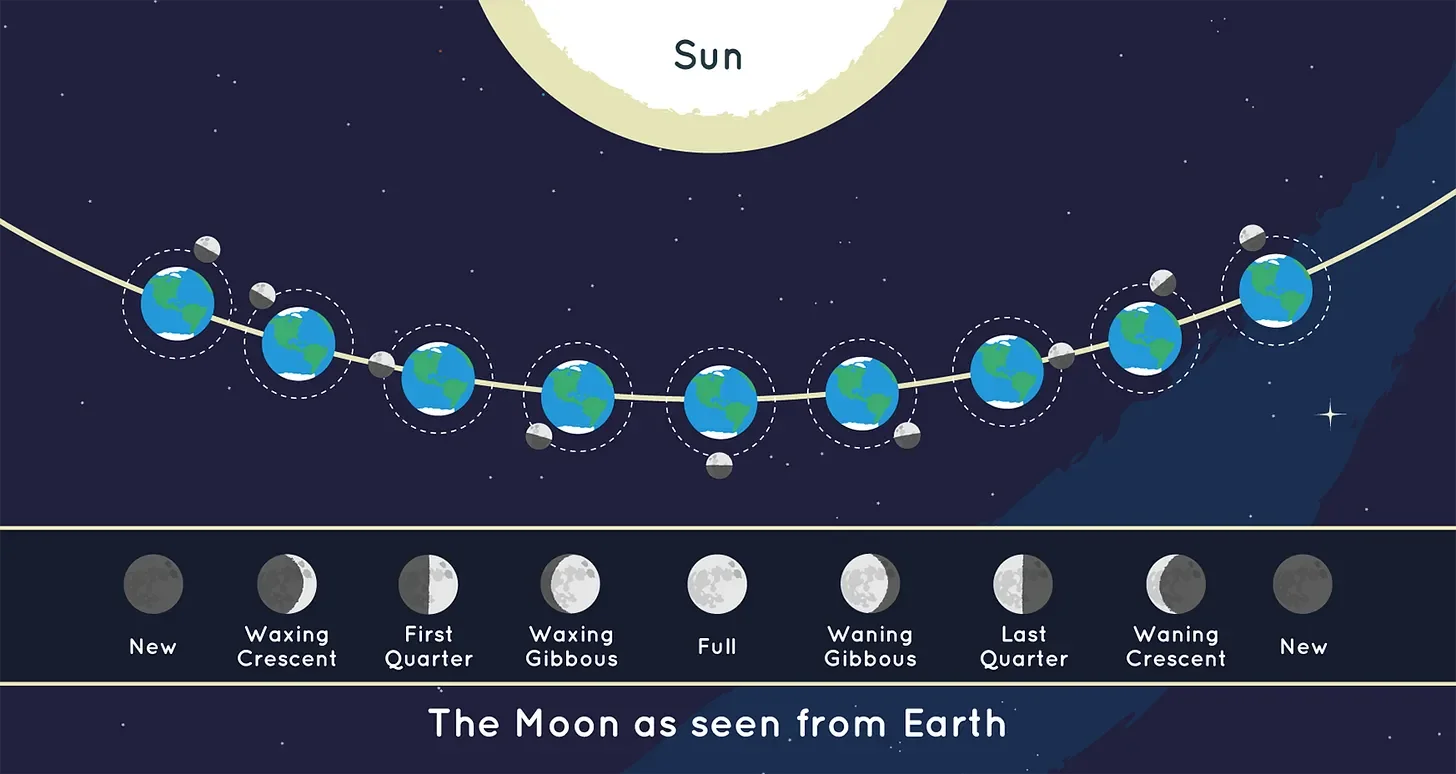
The fifth Hermetic principle is the Principle of Rhythm. This principle says that everything in life flows in and out, just as the tides do. Related to history and politics, Hegel described this as a pendulum in which an incident occurs, there is a reaction, then opposite reaction, and ultimately synthesis of those two toward progress and evolution. At the point of synthesis, the flow becomes assumed and no longer reactionary because we have integrated the growth.
In astrology, the most salient space in which this shows up is related to the moon. Because the moon cycles the most quickly of the planets around the zodiac (as it does around the earth) the ebbs and flows on earth created by the moon’s cycles are the most immediately noticeable.
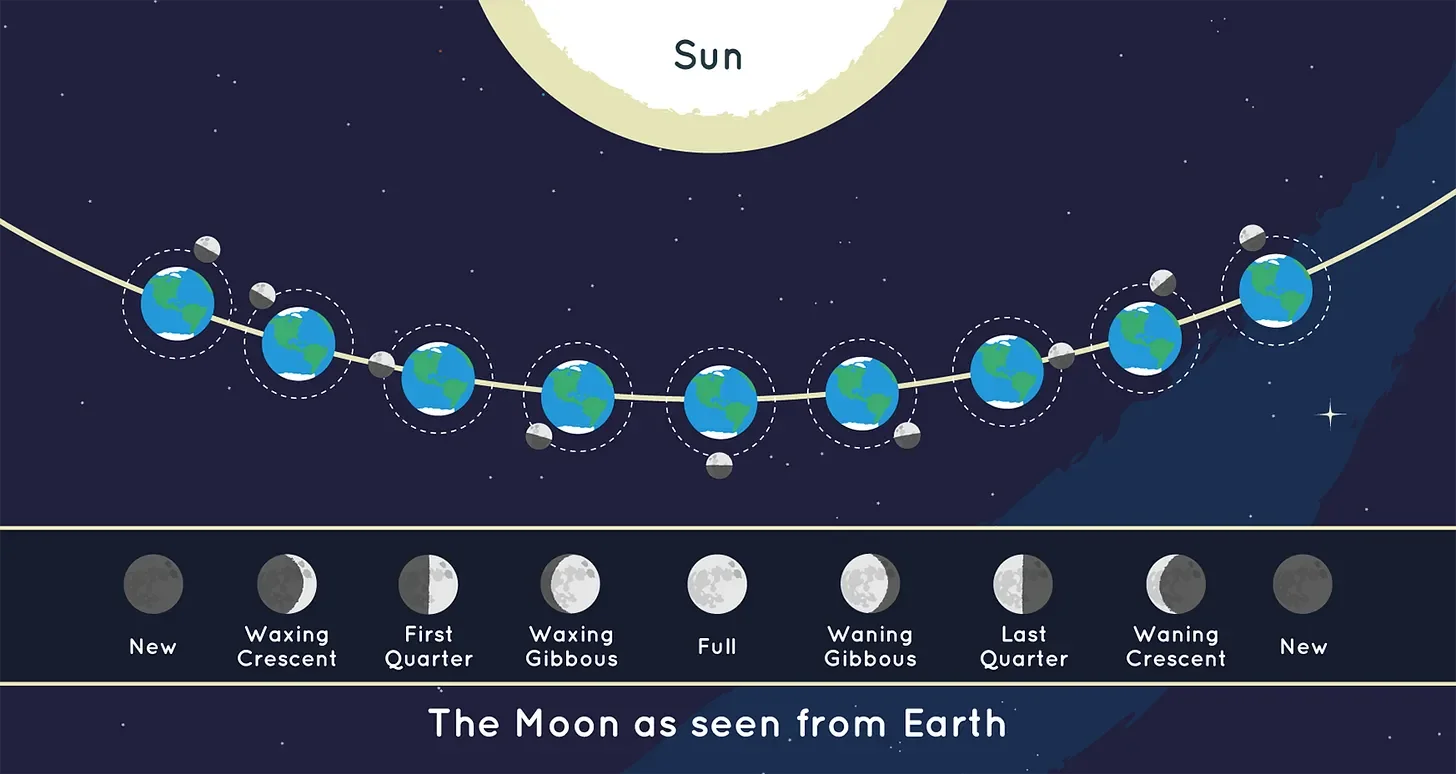
Each of the planets, not just the moon, is constantly traveling through the zodiac, each with their own influence on each other, us, and our environments, and so much of astrology is the study of the correlation of the ebbs and flows of the astrological cycles to the ebbs and flows on earth.
In law, the ebbs and flows of progress and regress are something that have enormous impact on each of our lives, even if we do not see them right away. Some believe that if you set realistic, but small, expectations for progress, you will get more traction and establish a better foundation for future progress. This was the theory Ruth Bader Ginsberg had when she advocated for gender equality using the disadvantage to men as her focus. Others believe a “blitzkrieg” of extreme action is more effective, believing that the more extreme the action, the less opportunity there is to counteract it. This is the theory behind the implementation of Project 2025.
There is also an increasingly large gap between what the general public in the United States understands to be the state of progress and regress and what legal professionals understand it to be.
For example, when COVID vaccines first came out, I received quite a few calls from conservative people who wanted to avoid getting vaccines where they were mandatory, based on conservative religious views. When I told them about their limited options, they explained to me that they understood their right to work with their medical doctors for healthcare to be absolute. Of course, those rights have been undermined by conservative advocates who are against women receiving reproductive healthcare. But, the conservative people I talked to were very surprised to hear that.
That raises the question as to whether the Principle of Rhythm applies to understanding and ignorance just as it does to other topics. We may have general moments of clarity and inspiration as flow points and moments of misunderstanding and ignorance as ebb points.
The best resources I have found for tracking this and understanding our own ebbs and flows in life is to watch the moons through the astrological chart. In generally tracking the moons for years, I have found that when the moon is in hard aspect to Pluto, and when there is a full moon, I have very low and agitated energy. While this is a work in progress, I have started taking those days off, knowing that they are ebb times. They are better for reflection, emotional processing, and introspection than attempting to create and influence the world.
My theory is that the more we study our own ebbs and flows and allow them to happen, the more effective we can be in influencing the ebbs and flows of our communities and the better we can reduce frustration.

Polarity and Spectrum
Polarity and Spectrum
The fourth Hermetic principle is the Principle of Polarity, “Everything has poles; everything has opposites.” This principle describes that along a binary line, everything happens by degree, which also acknowledges that spectrum exists. When we understand the extremes, we can understand a subject more fully, but ultimately the answer lies in the spectrum.
In astrology, we talk about the axis points of a chart and the angles that represent opposing, but related, natures.
Thanks for reading Lawstrology’s Substack! Subscribe for free to receive new posts and support my work.
In law, we talk about the importance of adversarial process and that in order to more accurately decide a case, we need to include opposing viewpoints in the evidence.
Polarity is not good or evil, positive or negative (although positive and negative are examples of a polarity like hot and cold are). Allowing moral judgment to overlay the topic of polarity clouds the topic. This is because moral judgment falls under the principle of correspondence (what is right for you is typically what we call “good” and what is incorrect for you is “bad”). Polarity lives outside of that type of moral judgment, and it is always a risk of clouding any issue (including correspondence) to overlay moral judgment.
Polarity exists on a spectrum, like hot and cold exist on a spectrum of temperature degrees. Not every topic exists on the same spectrum. So, hot and cold exist as the extremes of temperature, but hard and soft exist on a different spectrum.
This is important for understanding conflict and the nature of adversarial advocacy and for understanding an astrological natal chart.
In law and adversarial advocacy, the concept of polarity and spectrum is important because often what we think of as disagreement is actually people talking about two different topics or two different spectrums, not having polarized viewpoints. For the purposes of this discussion, we will call those different topics “platforms.” So, we see this with the topic of abortion, for example. One side constructs the argument around whether we should murder babies or not (one pole being the “pro-murder-babies” pole and the other being the “pro-life” pole). The other side constructs the argument around whether we should offer healthcare to women or not (one pole being the “withhold healthcare from women” pole and the other being “provide healthcare”). Because these arguments are not polarized to each other, but instead a construction about the topic itself, there is no opportunity for middle ground.
When we cannot agree about the topic of a problem, we cannot reach an understanding about what the spectrum of that problem looks like. Instead we talk separately about our own platforms.
Jumping platforms, versus arguing polarities is sometimes very useful. For example, the polarity of narcissism is “I am the best” and “I am the worst.” In order to escape the narcissism spectrum, we can jump platforms to, “I am curious what a person I love is doing.” So, rather than negotiating a self-defeating and self-centered polarity, we can jump outside of that topic to another one—in this case a topic that is not self-centered.
But, if we fail to acknowledge the original platform, sometimes it is not possible to completely make a shift. This is a fatal flaw in a lot of conflict. For example, in the abortion debate, one side stands on the “pro-life” platform, but people rarely argue “anti-life,” and so this is platforming, or marketing, not debating. However, when two people are platforming, a conflict cannot come to creative resolution. One person has to be able to acknowledge the polarity that the other is arguing in order to invite that person to a different polarity or platform.
Within each of us there is a version of this that in Internal Family Systems Therapy, they call our internal parts. While the astrological natal chart may not be a perfect representation of every person’s internal parts, it is a good starting place to talk about our internal polarities and platforms. Below is an example of an astrological wheel called the “Thema Mundi” the mythological natal chart of the birth of the universe.
The astrological wheel is made up of polarities or “axes.” For example, the signs Aries and Libra are opposite each other on the chart (you find them at the top and bottom of this chart). At their most basic, Aries and Libra represent the polarity of independence/dependence, with Aries being most independent, and Libra being most merged with the other. These are an example of the polarities to look at in your own natal chart (this does not represent the meanings of all of the signs, though, and is just an example):
Aries/Libra: self/other (or independence/dependence)
Taurus/Scorpio: bluntness/sharpness (or comfort/depth)
Gemini/Sagittarius: many ideas/singular truth (or chaos/pointedness)
Cancer/Capricorn: home/institution (or connectedness/separation)
Leo/Aquarius: individual/collective (or hero/community)
Virgo/Pisces: material/spiritual (or specific/nonspecific)

In order to better understand an individual person, topic, or debate, it is relevant to ask what spectrum we are discussing. If we believe we are arguing with each other, and we are really platforming, or arguing about different spectrums, we are unlikely to make progress related to that topic, and we usually leave feeling unheard or invalidated.
When people around us are not arguing in good faith, we can determine this by looking at whether they are willing or unwilling to shift from their platform and whether they do so with curiosity or only to win.
The more we understand an entire topic, including the poles of the topic, the better we can understand how to shift people or shift ourselves in the degrees of that topic to live lives that represent more thoroughly who we truly are.
For example, if I want to be more confident, I need to learn what spectrum confidence lives on and be curious about the poles and degrees of that spectrum. In that case, my experience is that the poles of confidence are willingness and unwillingness to be uncomfortable. The more willing we are to experience discomfort, the more confident we are. If we want to increase our confidence, the practical way to do so is to build tolerance for discomfort.
Mastery of ourselves and communities means learning the poles and the spectrum within the poles of the topics that impact us most.
Nothing Rests; Everything Moves; Everything Vibrates
Nothing Rests; Everything Moves; Everything Vibrates
The third Hermetic principle is the principle of Vibration: “Nothing rests; everything moves; everything vibrates. Things in higher vibration or quicker motion are associated with Spirit and heat; things in lower vibration or slower motion are associated with Matter and cold.
In astrology we talk about the movement, or transits, of the planets as the astrological weather. The cosmos is constantly in motion and in cycle, like we on earth are in motion and cycle. Astrology studies the correlation between celestial motion (vibrations associated with Spirit) and earthly motion (vibrations associated with Matter).
Thanks for reading Lawstrology’s Substack! Subscribe for free to receive new posts and support my work.
In law, we talk about the system and the movement of dispute through due process. I worked at a courthouse years ago and the presiding judge would always talk about the “hydraulics of the system” and how attorneys needed to respect the hydraulics of the system in their motions to postpone hearings. Legal systems organize the manifestation of vibration as Matter and the social agreements we make to structure Matter.
Astrology deals with the vibration of spirit; law deals primarily with the vibration of matter.
Toxic positivity says that if we achieve and maintain a “high vibration” at all times, we will become enlightened. It encourages people to deny the experience of Matter, deny the cyclical processes of life, and dissociate from our bodies in service of attaining “positivity.” The moral judgment associated with this (Spirit=positive/good and Matter=negative/bad), unfortunately, has the tendency to perpetuate and cover up cycles of violence and harm. If we dissociate in the face of spiritual and material dysfunction, we cannot change it.
We tend to associate density or slowness of the material vibration as unfavorable and the lightness and speed of the spiritual as favorable. This is misplaced, although there is wisdom in understanding our own preferences and the impact we want to make.
Legal process is famously slow. Although TV portrays the legal system as a system of scrappy, clever experts swooping in to save the vulnerable from bad guys, that is basically the opposite of what the legal system is. Legal process is a paperwork process that is intentionally created to slow down disputes.
This is because, as the saying goes, slow is smooth and smooth is fast. When we slow down and are deliberate, we will make better decisions. When we put a group of people (in the situation of law, a jury) with different backgrounds and life experiences in a room, they will be more uncomfortable and act slower, but make better decisions, than a single person who does things quickly and believes they are always right.
Understanding how to balance the spiritual and material experiences of life involves the cycle of vibration like everything else does in these incarnated bodies. In some seasons, quick, spiritual intuition is the appropriate resource. In other seasons obstacles slow us down so that we can test our actions through slow, material processes.
Because we are spiritual beings incarnated in material bodies, we all include both.
Astrologically, our natal charts represent the contracts we made with the universe as to what we will experience and who we will be in this incarnation.
Within astrology, the houses are a good way to look at our natal charts and get insight into our current incarnation. You can get your chart at astro.com (I recommend using whole sign houses for this exercise, but any house system can do this).
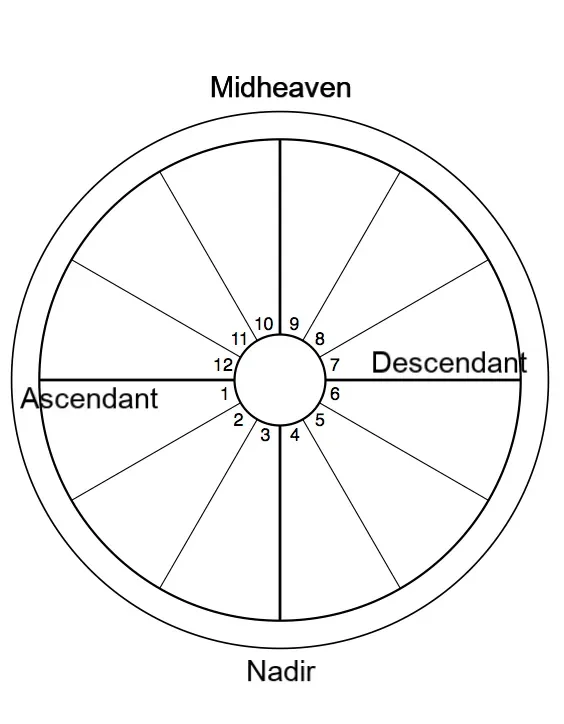
If you cut your chart in half along the horizontal (ascendent/descendent) axis (see the image below), the lower part of the chart generally gives you information about your material, personal incarnation, and the upper part of the chart tells you about the “higher” manifestation of that in the external and spiritual reality. This roughly corresponds with information about how you personally engage with the material and spiritual.
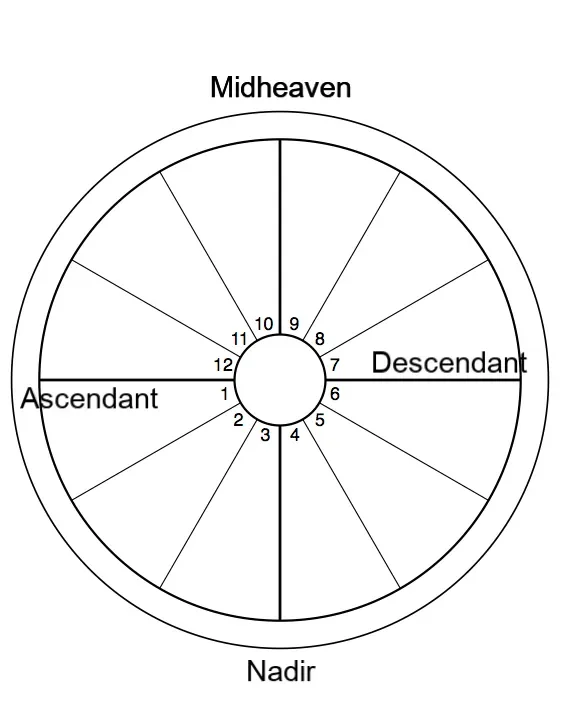
More specifically, this is how the houses manifest the vibratory nature of the universe:
The material and ancestral (these houses are associated with the self and early incarnation):
First house represents the self and the physical body and initiates the material incarnation. Here we find indicators of physical health or illness through the lifetime and the mask of material presentation we show to the world.
Second house represents resourcing.
Third house represents siblings and early learning.
Fourth house represents the home and mother.
Fifth house represents physical creation and father.
Sixth house represents daily routine, pets, and physical illness.
The spiritual and higher mind (these houses are associated with our relationship to the external and spiritual):
Seventh house represents partnership.
Eighth house represents other people’s resources and money.
Ninth house represents higher education and publishing.
Tenth house represents career.
Eleventh house represents friends, organizations, and groups of people.
Twelfth house represents spirituality, prisons, and mental illness.
In looking at the houses through a lens of the vibration principle, we can see that the Nadir, or lowest point of the chart, represents our resting point or point of least vibration. This is the space at which we are most material and most incarnated. The midheaven, or highest point of the chart, represents our highest vibration. This is the space where we are most spiritual and active.
Then, separately, the twelfth and sixth houses show us our vulnerabilities physically and mentally and our access points to physical and spiritual wellness.
The astrological natal chart gives us guidance as to how we, as specific humans, relate to the material and spiritual. The astrological natal chart is a spiritual agreement.
Legal structure, likewise, as a social agreement, gives us structure that is useful more broadly within the material concept of slowing down vibration through due process.
Due process is the right to notice and the right to be heard. These concepts are useful in any material interaction. The right to notice means that you have a right to be told about an allegation before you address it. The right to be heard means you have a right to address the allegation. This structure slows down high-vibration or “heated” interactions. It creates a structure for hearing and being heard that, even though not perfect, allows for the exchange of perspective regarding material experiences.
The cycle of birth, life, death, decay, and rebirth is the essence of the material and spiritual cycle of vibration, which systems like astrology and law create valuable meaning to interpret.
All Is Mind, The Universe is Mental
All is Mind, the Universe is Mental
There is a universal, Hermetic principle that says, “All is mind; the universe is mental.” This stands for the principle that consciousness, or awareness of the mind, is an inescapable experience of embodiment.
In astrology, we look to astrological natal charts as the starting point for our contracts with the Universe. We say that our consciousness agreed to experience certain challenges and benefits in this incarnation, and the astrological charts give information about how those mental agreements play out.
Thanks for reading Lawstrology’s Substack! Subscribe for free to receive new posts and support my work.
In law, we say that rational judgment, reason, and logic of the mind brings judges and juries to true and correct answers, after they hear evidence. The spoken word of agreement can be binding and the spoken word of witnesses is core to legal process. Spoken word is one manifestation of the mental. Evidence in courts is based in testimony, so the minds of the participants in the legal system translate and convey their mental experience, and then judges and juries receive that information and use their minds to come to, ideally, true and correct conclusions about how the social agreements (the law) applies to facts of a case.
In most TV shows that talk about law, the judges and juries see DNA and real-time video in order to prove cases. TV conveys a mental concept and asks the viewer to make their own mental judgments like a judge or jury would. In real courtrooms, testimony and the mental impressions of witnesses are considered crucial evidence. Even if documents or video exist, they may only be offered through witness testimony. Because TV attempts to short-cut the mental telephone game of the court process, it simplifies what can be a complicated and also rigid experience.
In legal institutions we apply the principle of mentalism through legal reasoning (social agreements) and spoken word.
But, most of us are not taught how to effectively manage our mental experience and mental impressions, and this contributes to unreliability in the legal process. We begin life believing everything we see, but as we get older, we understand more that mental impression does not equal truth. When five people sit in a room, they will walk out with five different experiences.
Most of us are taught that additional learning equals mental management, or that knowledge alone creates an organized mental state, but that is not my experience, or, I believe the experience of most people.
An astrological natal chart is one step toward knowing ourselves and examining our mental experience of life.
Also, though, what I have found, is that in order to be intentional with the principle of mentalism, we need to take six steps (and this is a process I use at least once a day):
Neutralize the external. For the sake of the exercise, describe the external environment that is outside of our control in a neutralized way. (e.g. Instead of “I hate my boss,” say “My boss is a human.”)
Write down our thinking. When we can understand the difference between our perspective and a neutralized reality, we can start to be intentional. (e.g. Notice that the thought “I hate my boss” has charge and is my mental process, not just an observation.)
Test out how our thinking feels in the abdomen and the rest of our bodies. Yes, in order to be effective in intentionally using the principle of mentalism, we have to be aware of our bodies. (e.g. When I choose the thought, “I hate my boss,” I feel hate.)
Observe what the feeling motivates us to do or not do. Feelings create actions, and even if we don’t fully act out our feelings, that is still a process we are experiencing. (e.g. When I feel hate, I struggle internally, blame people, complain to my friends, do my work more slowly, criticize myself, and even blame myself.)
Be honest about the consequences of our actions. Even if we are interrupting our actions and not fully acting them out, our internal processes and thinking spirals have impact. (e.g. When I take the actions above, my work suffers, and my boss gets away with their actions.)
Understand our own themes and patterns. (e.g. When I choose the thought “I hate my boss,” and I act out against myself, I am self-abusing.)
Then, in my own work, I reverse that process and do an intentional model. I don’t ask, “What do I want to think” because the unconscious mind takes over if we do that and attempts to maintain its familiar paths. Instead, I ask, “How do I want to feel?” or “What is the impact I want to have?” and build the process around those questions. In my work, I call that the IMPACT Model.
Our relationship to our contract with the universe and our social contracts is only as good as our ability to manage our thinking and our experience of the mental.
Thanks for reading Lawstrology’s Substack! Subscribe for free to receive new posts and support my work.
So mote it be!
As Above, So Below
As Above, So Below
There is a universal, Hermetic law that says, "As above, so below; as within, so without." In the legal system in the U.S., we say, “nobody is above the law, nobody is below the law.”
The universal law is referred to as “correspondence,” and the legal system principle is referred to as “rule of law.”
I’m going to use these posts for musings on the universal and mundane (or Earthly) principles we live by.
Astrology is the study of the correlation between celestial and terrestrial events, with the premise that there is a relationship between what happens above and what happens below.
Law is the study of human social agreements.
My background:
I have casually studied astrology since the year 2000, and more recently have seriously studied it under Chris Brennan and the Astrology School with a focus on Hellenistic astrology and traditional astrological principles.
I became a lawyer in 2012, and I have been a civil rights lawyer since 2014, mostly helping people transform toxic workplace experiences into safety and support.
I was raised in primarily Abrahamic religious cults, spent time studying Buddhism and Kabbalah, am a Level 3 Reiki healer, and more recently have been learning about witchcraft. I am a first degree Cabot Kent Witch (taking my second degree in December!). I have also studied human design and am a certified Kolbe consultant and life coach. I am less versed in Islam and Hinduism, though I have read the Bhagavad Ghita and been to temple. I love it when the Mormon missionaries come by to convert me and we often have interesting conversations about faith and superstition. I’m a learner!
One of my central practices is a thought management technique I developed called the IMPACT Model, and I might talk about that here as well.
Why Lawstrology?
I have seen how severely the legal system in the U.S. fails people from many angles, and I have also seen how most people have very wrong ideas about what the legal system does.
I strongly believe that in order to heal cultural divides and broken systems, including the legal system in the U.S., we can take wisdom from ancient traditions, while being open to expanding into new concepts for how we think about the structures that facilitate our relationships with each other.
I have found that understanding universal and social principles helps each of us to work toward growth, rather than decay, and I hope that for everyone who reads these posts.
The more we understand the principles around us, the more we can be intentional in how we interact with them.
So mote it be!